
A beautiful residential property requires more than occasional mowing, planting, or seasonal cleanup. Healthy trees, safe walkways, functional drainage, attractive outdoor spaces, and dependable equipment all need regular attention. When these elements are managed together, homeowners can protect curb appeal, improve safety, and reduce the likelihood of expensive repairs.
Seasonal weather often reveals problems that are easy to overlook. Winter freezes may shift patios and walkways, spring rain can expose drainage issues, summer heat may stress lawns and trees, and autumn storms can bring down weakened branches. A year-round plan allows homeowners to identify concerns early and schedule work before minor issues become major projects.
The most effective approach is to view the property as one connected system. Trees affect shade, drainage, soil conditions, and nearby structures. Lawns depend on proper watering, sunlight, and mowing practices. Patios and retaining walls rely on stable soil and effective grading. Coordinating these responsibilities helps keep the property attractive, functional, and easier to maintain.
Inspect Trees Before Minor Problems Become Hazards
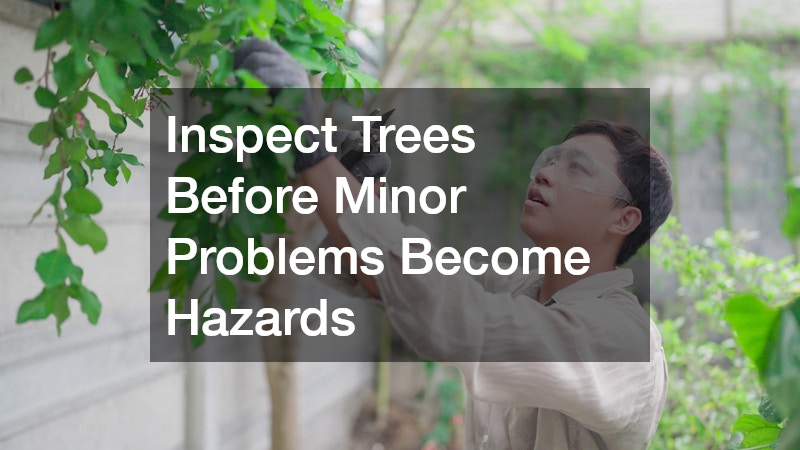
Mature trees are often among the most valuable features on a residential property. They provide shade, privacy, visual interest, and protection from wind. Their size and weight, however, mean that neglected problems can eventually threaten homes, vehicles, utility lines, and people.
Homeowners should visually inspect trees at least twice a year. Early spring is a good time to identify winter damage before leaves conceal branches, while late fall offers another clear view of the canopy and trunk. Additional inspections should be completed after strong winds, heavy snow, ice accumulation, or unusually intense rain.
Warning signs that may require professional evaluation include:
- Dead or hanging branches
- Cracks where large limbs connect to the trunk
- Mushrooms or fungal growth near the base
- Cavities, soft wood, or visible decay
- Soil lifting around the roots
- A sudden or increasing lean
- Thinning foliage or unusual discoloration
- Bark falling away from large sections
- Roots damaged by construction or lawn equipment
Professional local tree services can help distinguish normal tree characteristics from evidence of structural decline. A tree that appears unhealthy may be affected by compacted soil, poor drainage, root damage, pests, or disease. Early diagnosis may allow the problem to be treated before removal becomes necessary.
Routine tree maintenance may include pruning, soil aeration, fertilization, pest control, support cables, or protection during construction. Homeowners should also care for the area around each trunk. Mulch can conserve moisture and protect roots, but it should be spread in a wide, shallow layer rather than piled against the bark.
Repeated contact from mowers and string trimmers can also injure trees. Even small wounds may create openings for insects and disease. Protecting the trunk and root zone is one of the simplest ways to support long-term health.
Schedule Pruning to Improve Structure and Clearance
Pruning should do more than make a tree smaller. Proper cuts improve branch structure, remove hazards, increase clearance, and support healthier future growth. Poor pruning can weaken the canopy, encourage decay, and permanently alter the tree’s appearance.
Branches may need attention when they:
- Rub against one another
- Hang over roofs or driveways
- Block sidewalks, signs, or exterior lighting
- Grow too close to chimneys or siding
- Obstruct visibility near roads
- Interfere with neighboring trees
- Show signs of disease or storm damage
A qualified tree trimming company can determine which limbs should be removed without stripping away too much foliage. Large cuts must be planned carefully because they affect how the tree distributes weight and responds to wounds. Removing too much of the canopy at once can reduce the tree’s ability to produce energy.
Pruning schedules vary according to species, climate, and the purpose of the work. Some trees respond best during dormancy, while others require different timing to limit exposure to pests or disease. Flowering trees may also need to be pruned according to when they develop buds.
A tree contractor may be appropriate when a project involves several trees, construction clearance, preservation planning, large removals, or roots near walls and utility lines. Before hiring a provider, homeowners should ask:
- Is the company properly insured?
- What pruning method will be used?
- Does the estimate include cleanup?
- How will nearby structures and landscaping be protected?
- Will large equipment be required?
- How will lawn damage be minimized?
Homeowners should be cautious of anyone who recommends topping a healthy tree. Topping removes large portions of the canopy and often creates weak, rapidly growing shoots. Work near electrical lines should always be handled by qualified professionals in coordination with the utility provider.
Prepare the Property Before Severe Weather
Storm preparation should begin before severe weather appears in the forecast. Trees with weak branch unions, internal decay, damaged roots, or excessive lean may fail when exposed to wind, saturated soil, ice, or heavy snow.
Homeowners should pay particular attention to trees near:
- Houses, garages, and sheds
- Driveways and parked vehicles
- Fences and neighboring structures
- Utility lines
- Play areas
- Outdoor seating spaces
Photographing major trees and exterior features before storm season creates a useful record of the property’s condition. These images may also help document damage during an insurance claim.
After a storm, safety should come before cleanup. Broken limbs may remain suspended overhead, and partially uprooted trees can shift without warning. Branches under tension can also move violently when cut.
A storm damage tree removal service should be contacted when a tree has fallen on a structure, blocked an important driveway, split through the trunk, become entangled with another tree, or developed an unstable root plate. Emergency professionals can determine the safest order for removing damaged sections.
When a large tree is resting on a roof or located in a confined area, local crane companies may assist with the removal. A crane allows heavy sections to be lifted in a controlled manner instead of being dropped near a home. This approach may also reduce damage to lawns and nearby structures.
Immediately after severe weather:
- Keep people and pets away from damaged areas.
- Stay clear of downed utility lines.
- Contact the utility company when wires are involved.
- Avoid walking beneath cracked or hanging limbs.
- Photograph damage before cleanup begins.
- Contact the insurance company when structures are affected.
- Confirm that emergency crews are insured.
Homeowners should never climb a damaged tree or cut a suspended branch from a ladder. Keeping trusted provider, utility, and insurance information readily available can save valuable time during an emergency.
Remove Old Stumps Before Starting New Projects
A leftover stump may appear harmless, but it can interfere with landscaping for years. Stumps create obstacles for mowing, limit planting options, attract insects, encourage fungal growth, and may become tripping hazards. Some also continue producing unwanted sprouts.
Stump grinding services use specialized equipment to reduce the visible stump below the surrounding grade. The opening can then be filled and prepared for grass or a planting bed. Most deeper roots remain underground and decay naturally over time.
Grinding differs from complete root removal. Excavating an entire root system is more disruptive and may require heavy machinery. Full removal may be necessary when the area will support a foundation, driveway, pool, retaining wall, or another permanent structure.
A tree service company can often coordinate grinding with tree removal, pruning, debris hauling, and broader property cleanup. Combining related work may be more efficient than scheduling multiple visits.
Before grinding begins, homeowners should identify irrigation lines, landscape lighting, drainage pipes, septic components, and underground utilities. After the work is completed, excess wood chips should usually be removed rather than used to fill the entire opening. Wood chips shrink as they decompose, which can cause the ground to sink.
For lawn restoration, add clean topsoil, allow the area to settle, and then seed or install sod. Homeowners planning a walkway, patio, or fence should give the former stump area time to stabilize before construction begins.
Inspect Outdoor Surfaces and Drainage Routes
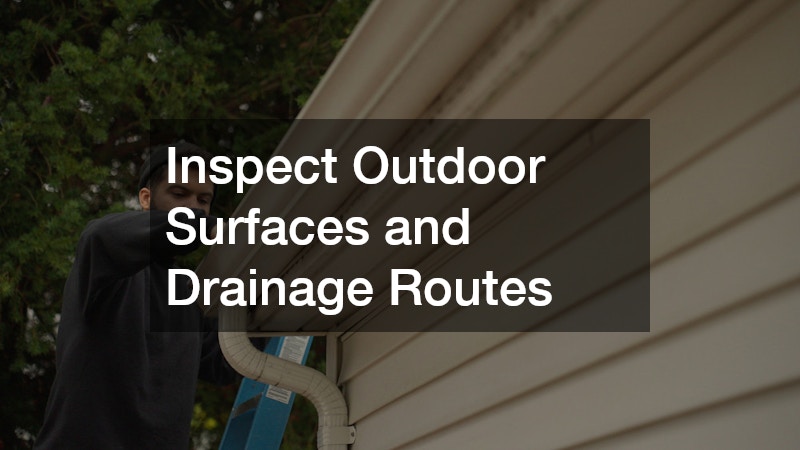
Patios, walkways, steps, retaining walls, and landscape edging are exposed to water, soil movement, roots, temperature changes, and everyday traffic. Small defects can quickly become drainage problems or tripping hazards when ignored.
At least twice a year, inspect these areas for:
- Uneven or rocking pavers
- Cracked concrete
- Loose steps
- Open joints
- Leaning retaining walls
- Eroded soil
- Water pooling near the house
- Low spots in patios or walkways
- Weeds growing through joints
- Downspouts emptying onto paved areas
Freeze-thaw cycles can shift outdoor surfaces, especially when water enters joints or collects beneath the base. Repairs should address the source of the movement rather than only correcting the visible damage.
A hardscaping service can reset pavers, repair steps, rebuild failing sections, improve grading, install drainage, or replace deteriorated materials. Simply lifting a sunken paver may provide only temporary improvement if runoff or leaking gutters continue washing away the base.
Retaining walls require special attention. Bulging, leaning, separating blocks, or soil washing through joints may indicate water pressure behind the wall. Proper drainage must allow water to move through or around the structure without pushing it outward.
Routine maintenance can extend the life of outdoor surfaces:
- Sweep away soil and organic debris.
- Remove weeds before roots become established.
- Replenish joint sand when needed.
- Use gentle cleaning methods.
- Repair drainage problems promptly.
- Redirect downspouts away from walls and paving.
- Avoid harsh deicing products on vulnerable materials.
Homeowners should also consider future plant growth. A small tree installed too close to a walkway may eventually produce roots capable of lifting pavers or cracking concrete.
Match Lawn Care to the Property
A healthy lawn depends on soil quality, drainage, sunlight, irrigation, grass type, mowing height, and seasonal weather. Frequent mowing alone cannot correct compacted soil, excessive shade, or poor water management.
One useful guideline is the one-third rule. Homeowners should avoid removing more than one-third of the grass blade during a single mowing. Cutting too much at once stresses the turf, exposes the soil to heat, and can encourage weeds.
Good mowing practices include:
- Keeping blades sharp
- Mowing when the grass is reasonably dry
- Alternating mowing directions
- Adjusting height for the season
- Avoiding scalping on slopes and edges
- Leaving fine clippings when they do not clump
- Cleaning equipment after use
Homeowners comparing equipment through lawn mower sales providers should consider more than price. The right machine depends on lot size, terrain, storage space, noise preferences, physical ability, and maintenance expectations.
A small, flat lawn may be manageable with a push or battery-powered mower. Larger properties may benefit from self-propelled or riding equipment. Lots with slopes, trees, narrow gates, or extensive planting beds require equipment that can maneuver safely.
Seasonal equipment care is equally important. Gas-powered models may need oil changes, filter replacement, spark-plug inspection, blade sharpening, and fuel preparation. Battery equipment should be stored and charged according to the manufacturer’s instructions.
When turf remains thin, the underlying issue may involve:
- Compacted soil
- Poor drainage
- Excessive shade
- Overwatering
- Drought stress
- Insects or disease
- Nutrient imbalance
- Heavy foot traffic
Aeration can relieve compaction, while overseeding may improve density. Soil testing helps determine whether fertilizer or pH adjustments are actually necessary. Watering should generally be deep enough to encourage strong roots, but rainfall, soil type, local restrictions, and grass species should guide the schedule.
Organize Maintenance Around the Seasons
A written calendar makes property care easier to manage. Grouping inspections, equipment servicing, and improvement projects by season reduces the chance that important tasks will be forgotten. Homeowners should keep invoices, warranties, photographs, planting records, and inspection notes in one file. Good records make it easier to track recurring problems and plan replacements.
Project order matters as well. Hazardous trees should be addressed before installing patios beneath them. Underground drainage should be corrected before restoring damaged turf. Old stumps should be cleared before adding fences or planting beds. Coordinating work prevents new improvements from being disturbed by later repairs.
Create a Property That Is Easier to Maintain
Year-round property care is most successful when homeowners focus on prevention. Regular inspections reveal concerns while they are still manageable, and seasonal planning protects plants, surfaces, structures, and equipment from unnecessary damage.
Not every task requires professional assistance, but homeowners should recognize the limits of do-it-yourself work. High branches, unstable trees, failing walls, underground utilities, and large equipment can create serious risks. Hiring qualified help at the appropriate time can prevent injuries and protect nearby structures.
The goal is not to keep every part of the landscape perfect at all times. A better objective is to follow a consistent routine that prioritizes safety, drainage, structural stability, plant health, and appearance. With thoughtful planning and timely care, a residential property can remain attractive, functional, and enjoyable throughout every season.