Most homeowners never think about the slope of their yard until water starts pooling where it shouldn’t, or a drain backs up after every heavy rain. The grade of your property quietly influences everything from how your foundation holds up to how efficiently your outdoor equipment runs. Understanding which way your land slopes, and how that affects the systems buried beneath it or sitting on top of it, can save you from expensive repairs down the road. This guide breaks down the key areas where yard slope matters most and what you can do to stay ahead of problems.
Grading Basics and Why Water Direction Matters
Every yard has a grade, even if it is not obvious to the naked eye, and that grade determines where rainwater naturally travels. A proper slope moves water away from your home’s foundation at a gentle, consistent rate, typically falling about six inches over the first ten feet. When the grading is off, water collects near the house instead of draining away, which can lead to soggy soil, basement seepage, and long-term structural stress.
Identifying your yard’s slope does not require special tools. You can walk the perimeter of your house after a rainstorm and watch where puddles form, or use a simple level and stakes to measure the rise and fall across the lawn. Correcting a poor grade often involves adding soil to low spots or regrading sections entirely, which is a worthwhile investment compared to dealing with water damage later.
- Look for standing water near the foundation 24 hours after rain
- Check that downspouts extend at least four to six feet from the house
- Notice any cracks in the foundation that could signal water intrusion
- Watch for mulch or soil washing away in consistent patterns
Foundation Drains and Basement Waterproofing Systems
A sloped yard that pushes water toward the house puts direct pressure on foundation drains, sometimes called French drains, which are designed to redirect groundwater away from the structure. Over time, sediment and debris can clog these perforated pipes, especially if the surrounding soil erodes unevenly due to poor grading. When a foundation drain fails, water has nowhere to go but into the basement, often through cracks or the joint where the wall meets the floor.
Homeowners sometimes assume a damp basement is just a humidity issue, but it is frequently a drainage problem rooted in the yard’s slope. If water consistently pools in one corner of the yard, that same water is likely pressing against the foundation wall nearby. Addressing the exterior grading issue first is usually more effective than treating the symptoms inside the house.
- Musty basement odors can indicate chronic moisture from poor exterior drainage
- Efflorescence, a white chalky residue on walls, points to water seeping through concrete
- Sump pumps running constantly may signal a grading issue feeding excess water underground
Sewer Lines, Septic Systems, and Underground Pipe Stress
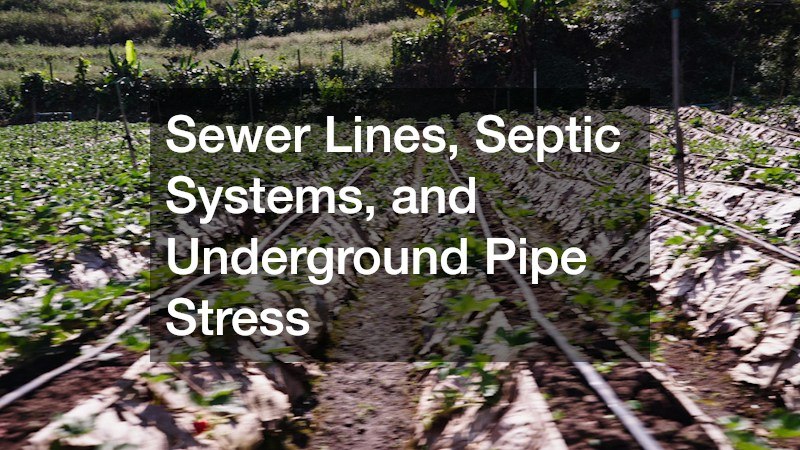
The slope of your property affects more than surface water; it also influences how underground pipes are laid and how well they function over time. Sewer lines rely on gravity to move wastewater toward the municipal connection or septic tank, and if the yard’s natural grade fights against that design, pipes can experience uneven settling or pooling within the line itself. This is especially common in older homes where the original plumbing was installed without accounting for later landscaping changes.
Tree roots are drawn to the moisture that collects in low-lying, poorly drained areas, and they can infiltrate pipe joints that have shifted due to soil erosion or saturation. When backups become frequent, it is worth calling drain cleaning services to clear blockages and assess whether the slope or soil conditions are contributing to the recurring issue. A professional inspection with a camera can reveal whether roots, sediment, or a structural dip in the pipe is the real culprit.
- Slow drains throughout the house can indicate a main line issue tied to pipe slope
- Gurgling sounds from toilets often mean air is trapped due to a blocked or misaligned line
- Frequent backups in the same drain suggest a recurring low point in the pipe
Outdoor HVAC Units and Drainage Around the Condenser
Central air conditioning systems have an outdoor condenser unit that needs to sit on stable, level ground to function properly and avoid premature wear. If your yard slopes toward the spot where the unit is installed, rainwater and runoff can collect around the base, leading to rust, electrical issues, and soil erosion that eventually tilts the unit off level. A tilted condenser puts strain on the internal components and can shorten the system’s lifespan significantly.
Poor drainage around an outdoor unit is one of the lesser-known reasons homeowners end up needing AC repair sooner than expected. Standing water near the unit can also attract pests and accelerate corrosion on the cabinet and coils. A simple fix is to install the unit on a raised, level pad and ensure nearby grading channels water away from that section of the yard.
- Keep at least two feet of clearance around the unit for airflow and drainage
- Check for rust or standing water at the base after storms
- Consider a gravel or concrete pad raised slightly above grade
Irrigation and Sprinkler System Efficiency
Sprinkler systems are designed around a yard’s existing contours, but slope can cause water to run off before it ever soaks into the soil, especially on steeper sections. This runoff wastes water and can create erosion channels that undermine walkways, garden beds, and even shallow utility lines. Adjusting sprinkler head placement and flow rate to match the grade helps water penetrate the soil more evenly.
In sloped yards, it often helps to break irrigation zones into shorter watering cycles rather than one long soak, giving water time to absorb instead of running downhill. Mulching slopes and adding ground cover can also reduce erosion while improving how well the irrigation system performs over the season. These small adjustments protect both your landscaping investment and the underlying soil structure.
- Use multiple short watering cycles on sloped zones instead of one long cycle
- Install check valves to prevent low-head drainage after the system shuts off
- Add mulch or ground cover on slopes steeper than a gentle grade
Patios, Walkways, and Retaining Wall Drainage
Hardscaping features like patios and walkways are especially vulnerable to slope issues because concrete and pavers do not absorb water the way soil does. If these surfaces are installed without a slight pitch away from the house, water can pool on them or redirect toward the foundation instead of away from it. Retaining walls, meanwhile, need proper drainage behind them to relieve hydrostatic pressure, or they risk bulging and eventually failing.
If you are planning a hardscaping project, it is worth having a licensed plumber or drainage contractor review the grading plan before construction begins, since fixing drainage after pavers or concrete are installed is far more costly. Weep holes, gravel backfill, and perforated drainpipe behind retaining walls all help manage water that the slope naturally funnels toward these structures. Getting this right the first time prevents cracking, shifting, and water intrusion for years to come.
- Patios should pitch away from the house at a slight but noticeable angle
- Retaining walls need weep holes or drainpipe to relieve water pressure
- Gravel backfill behind walls improves drainage and reduces heaving
Your yard’s slope is not just a landscaping detail, it is a system that interacts with your home’s plumbing, foundation, and outdoor equipment every time it rains. Taking the time to observe how water moves across your property can help you catch small issues before they become expensive repairs. If you notice persistent pooling, slow drains, or equipment problems tied to drainage, addressing the grading itself is often the most lasting solution. A little attention now can protect your home’s systems for years to come.